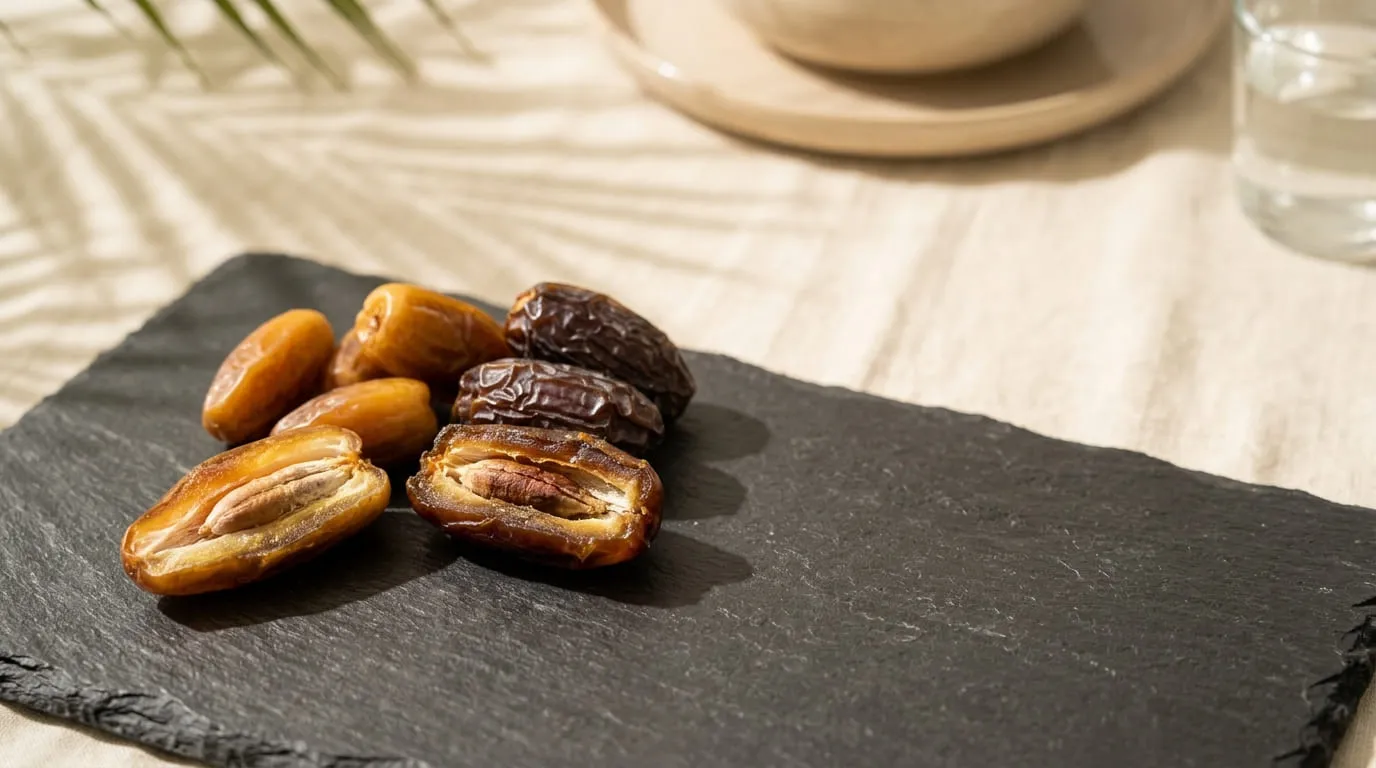




How many dates can you eat per day? This is a frequent question, especially when you enjoy Tunisian Deglet Nour for its naturally sweet taste. The answer depends on several factors: age, physical activity level, eating habits and the nutritional needs of each person.
There is therefore no single number of dates that would suit everyone. Dates can perfectly fit into a balanced diet, but their naturally concentrated carbohydrate content and small size make portions easy to exceed.
For a more reliable benchmark, it is often more useful to think in grams than in number of dates. The NHS and Diabetes UK use around 30 g of dried fruit as a benchmark for one portion, with variations depending on the type and size of the fruit.
How Many Dates Per Day for an Adult?
For a healthy adult, a portion of around 30 g of dates is a practical benchmark.
The exact number depends on the variety and especially the size of the fruit. Two large dates do not necessarily represent the same quantity as several small dates.
This is why it is best not to treat any single figure as a universal rule.
As a benchmark, Diabetes UK indicates that two Medjool dates count as one fruit portion, which clearly shows how important date size is when counting in units.
For someone who simply wants to include dates in their daily diet, a moderate portion can therefore be eaten as part of a varied diet, taking into account the other sources of carbohydrates and fruit eaten during the day.
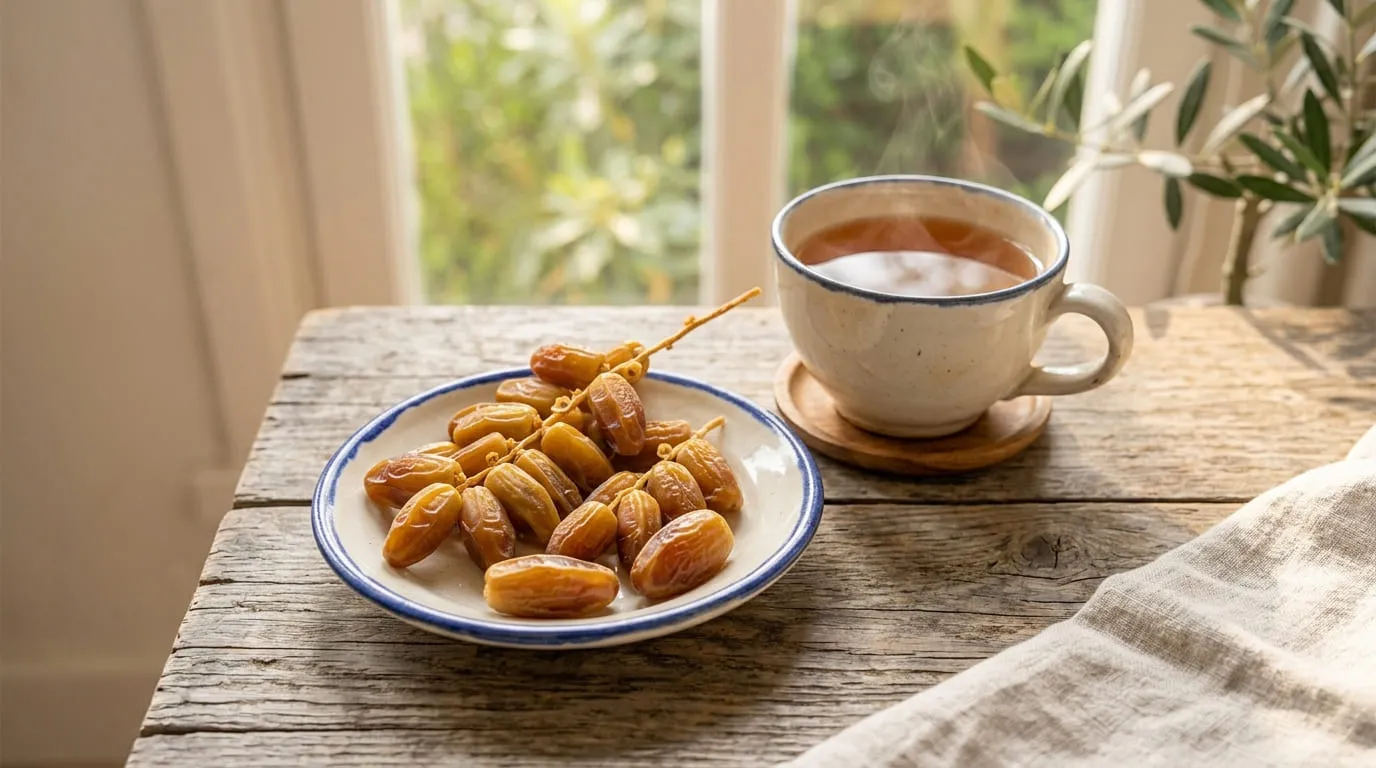
How Many Dates for an Athletic Person?
The dietary needs of an athletic person can differ from those of someone less active.
Dates naturally contain carbohydrates, allowing them to provide energy in a practical form. They can therefore be included in the diet around physical activity, depending on the duration and intensity of the effort as well as the other foods eaten.
A small portion can for example be eaten before a session when that matches the person's habits. After physical activity, dates can also be combined with a source of protein and other foods as part of a balanced meal or snack.
Still, there is no need to eat a large quantity of dates simply because you play sports. Energy needs vary considerably from one person to another.
How Many Dates for a Child?
For children, the quantity must be adapted to age, size and dietary needs.
It is therefore not sensible to give the same number of dates to a young child and to a teenager.
The NHS indicates that fruit and vegetable portions for children depend on their size and age, with the rough guide being the amount they can hold in the palm of their hand.
Dates can be offered in small quantities and included in a diversified diet containing different fruits, vegetables and other food groups.
For young children, it is also important to adapt food texture and preparation to their age in order to reduce the risks linked to eating whole foods.
How Many Dates During Ramadan?
Dates hold a traditional place in the meal that breaks the fast.
The World Health Organization recommends, in its advice for a balanced Ramadan, breaking the fast with dates and mentions three dates as an example before the meal.
This does not mean, however, that three dates are a mandatory or ideal quantity for every person.
The meal that follows must also be taken into account. Eating a large quantity of dates, followed by many foods rich in carbohydrates or sugars, can quickly increase the total quantity consumed.
During Ramadan, overall meal balance and sufficient hydration remain essential.
How Many Dates When Watching Your Weight?
Dates can be eaten as part of a diet aimed at maintaining or reducing weight, but the total quantity eaten during the day remains important.
Because they are small and pleasant to eat, it is easy to eat several without really measuring the portion.
A good approach is to prepare a portion in advance rather than eating directly from a large container.
Combining them with other foods can also create a more complete snack, for example with plain yogurt or a few tree nuts, depending on needs and eating habits.
The goal is not necessarily to eliminate dates, but to include them consistently in the daily food intake.
Can You Eat Dates Every Day?
Yes, dates can be part of a daily diet for many people.
Their consumption simply needs to stay consistent with the diet as a whole.
Dates are fruits naturally rich in carbohydrates. They also provide fiber and various micronutrients. As they are eaten in a relatively concentrated form, a sensible portion is particularly important.
Nutrition recommendations are not about eliminating naturally sweet foods, but about favoring a varied diet and adapting quantities to individual needs.
Diabetes UK notably reminds that the sugars naturally present in whole fruit are not considered "free sugars", while stressing that portions still matter, particularly with dried fruit which is easy to eat in large quantities.
Dates and Diabetes: Should They Be Avoided?
Having diabetes does not necessarily mean removing all fruit from your diet.
Dates do contain carbohydrates, however, which can affect blood sugar. The portion and the total quantity of carbohydrates eaten during the meal are therefore important.
Diabetes UK recommends watching dried fruit portions and indicates that a portion of around 30 g can represent a significant quantity of carbohydrates. The organization also advises spreading fruit intake throughout the day rather than eating a large quantity in one go.
For a person with diabetes, the appropriate quantity depends on treatment, blood sugar goals and the rest of the diet. When in doubt, it is best to ask a doctor or health professional for advice.
How Many Dates During Pregnancy?
During pregnancy, dates can be part of a varied diet, like other fresh or dried fruit.
There is, however, no universal quantity of dates that should be eaten daily during pregnancy.
General NHS recommendations encourage a balanced diet including different portions of fruit and vegetables, which can include fresh, frozen, canned or dried fruit.
It is therefore best to consider dates as one of the foods that can contribute to a diversified diet rather than as a food to be eaten in a set quantity.
Why Is It Better to Count in Grams Than in Number of Dates?
Saying "three dates" or "five dates" can be misleading.
A small Deglet Nour and a large date of another size can weigh very differently.
This is why nutrition recommendations often use portion weight.
The 30 g of dried fruit benchmark is notably used by the NHS. Diabetes UK also gives 30 g as a dried fruit portion and specifies that two Medjool dates count as one portion in its guide.
For Tunisian dates, it is therefore more useful to check the weight indicated on the pack when you want to control your consumption precisely.
What Happens If You Eat Too Many Dates?
Eating a few extra dates occasionally is generally no reason to worry for a healthy person.
On the other hand, frequent large consumption can significantly increase total carbohydrate and calorie intake.
Dried fruit is particularly easy to overeat because it takes up little space and is visually less filling than an equivalent quantity of fresh fruit. Diabetes UK rightly points out that it is easy to eat a large quantity of dried fruit without realizing it.
The idea is therefore less about finding an absolute maximum number than about mastering portions and considering your diet as a whole.
How to Include Dates in a Balanced Diet?
Dates can be eaten in many ways.
A few simple ideas:
- at breakfast;
- as part of a snack;
- with tree nuts;
- with plain yogurt;
- in a salad;
- in a home-made preparation;
- before physical activity as needed;
- at mealtimes, particularly during Ramadan.
For dried fruit, the NHS recommends eating it preferably at mealtimes rather than as a repeated snack between meals, notably because of its potential impact on dental health.
So, How Many Dates Per Day?
There is no universal figure that works for everyone.
As a practical benchmark, a portion of around 30 g of dates can serve as a reference for an adult, but the corresponding number of dates depends on their size and weight.
To summarize:
| Profile | General benchmark |
|---|---|
| Healthy adult | Around 30 g as a portion benchmark |
| Athletic person | To adapt to energy needs and activity |
| Child | Portion adapted to age and size |
| Ramadan | A few dates can accompany the fast-breaking, depending on habits and the meal |
| Weight management | Favor a measured portion and consider overall diet |
| Diabetes | Portion and carbohydrate quantity to adapt with a health professional if needed |
| Pregnancy | Include dates in a varied diet, with no specific universal quantity |
The essential point is therefore not to treat "3", "5" or "7" dates as a rule valid for everyone. Date size, weight and the overall diet matter more than the simple number of fruits.
Tunisian Deglet Nour Dates
Tunisian Deglet Nour, especially from the oases of Kebili, can easily fit into a varied diet when eaten in adapted quantities.
At Nouran Dates, our business specializes in the packaging and export of Tunisian dates. We pay particular attention to selecting, preparing and packaging our dates to meet the needs of different markets.
Whether enjoyed simply or included in a recipe, dates remain above all a naturally sweet food that fits into a balanced diet when quantities suit each person's needs.
Key Takeaway
There is no ideal number of dates per day for everyone. A benchmark of around 30 g can be used for a dried fruit portion for adults, but the corresponding number of dates depends on their size. People with specific needs, particularly with diabetes or a specific medical situation, should adapt their consumption with the help of a health professional.
Learn more: check the weight of each format on our packaged dates and branched dates pages, or request a quote.